Hyperbole or Possibility?
In the late 18th century, the abolition of the trans-Atlantic slave trade was considered an economic and political impossibility. Yet men like William Wilberforce, driven by a deep-seated Christian conviction that every human being was created in the image of God, refused to accept slavery as the status quo.
Wilberforce is credited with saying, “We are too young to realize that certain things are impossible… So we will do them anyway.” His persistence turned a moral outrage into a global shift. Today, slavery remains a shadow in the darkest corners of the earth, but in those nations where the Church is vibrant and Biblically rooted, it has been systematically dismantled.
We stand at a similar threshold regarding global food insecurity. For too long, the Church in the Global South has been forced to accept hunger as a permanent condition of ministry. We often treat food insecurity as a tragedy of circumstance, but the Scriptures suggest that true provision is inextricably linked to the wisdom of our work. As Proverbs 14:23 declares, ‘Work brings profit, but mere talk leads to poverty.’ For too long, the Church has been crippled by the ‘mere talk’ of dependence, awaiting external relief rather than exercising dominion over the soil we were called to steward. When we accept poverty as inevitable, we ignore the reality that Christ’s discipleship is meant to transform every sphere of life. Agricultural discipleship is not merely a technical solution; it is a spiritual recovery of the diligence, wisdom, and responsibility that define a life lived under the lordship of Christ.
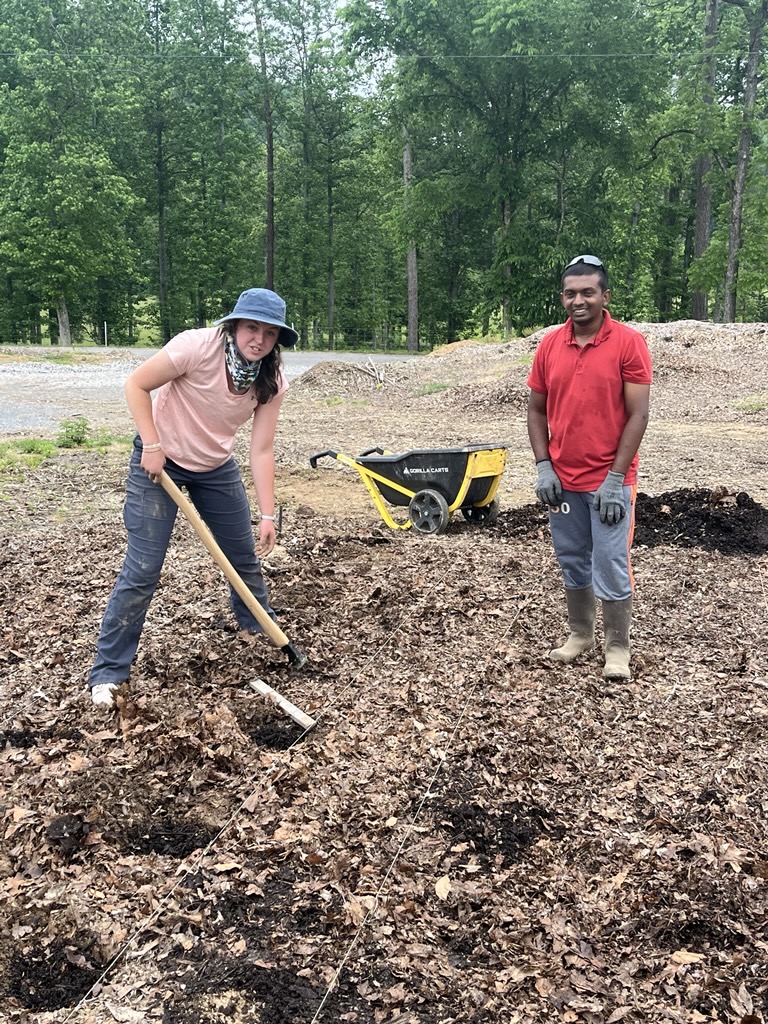
Equipping Farmers International (EFI) is not offering another temporary aid program. We are catalyzing a movement of dignity. By training leaders and farmers in conservation agriculture—restoring soil health, diversifying yields, and fostering household independence—we are empowering the Church to feed itself.
The numbers tell a story of profound hope. Through a master-trainer model, we aim to equip 30 to 60 million farmers by 2046. Just as Wilberforce’s movement relied on mobilizing local conscience, EFI relies on mobilizing local leaders. We are shifting from 8,000 leaders trained this year to a projected 100,000 trainers globally. There is no reason to settle for hunger in the church and in the communities where the church is rooted! The church can deal a catastrophic blow to global food insecurity just like it did to slavery. We have enough land. We have enough farmers. We have enough churches. We have enough Christians. God has provided.
Some will call this vision hyperbolic, even naive. Yet, we remember the promise of Matthew 19:26: “With man this is impossible, but with God all things are possible.” There is no greater impossibility than our salvation, and yet God is able. Surely He is able to feed the hungry.
When the Church is fed, the Church will go. By restoring the relationship among the people, the land, and the Provider, we are building a future where food insecurity is not inevitable but a relic of the past.
I invite you to join us in this generational work—not by offering charity that fosters dependency, but by investing in the infrastructure of hope. The soil is ready. The Church is waiting. Christ has come. It is time to harvest.